
 By
Hannah Diffey
Published 59 minutes ago
Hannah is a senior writer and self-publisher for the anime section at ScreenRant. There, she focuses on writing news, features, and list-style articles about all things anime and manga. She works as a freelance writer in the entertainment industry, focusing on video games, anime, and literature.
Her published works can be found on ScreenRant, FinanceBuzz, She Reads, and She Writes.
Sign in to your ScreenRant account
Add Us On
Summary
Generate a summary of this story
follow
Follow
followed
Followed
Like
Like
Thread
Log in
Here is a fact-based summary of the story contents:
Try something different:
Show me the facts
Explain it like I’m 5
Give me a lighthearted recap
By
Hannah Diffey
Published 59 minutes ago
Hannah is a senior writer and self-publisher for the anime section at ScreenRant. There, she focuses on writing news, features, and list-style articles about all things anime and manga. She works as a freelance writer in the entertainment industry, focusing on video games, anime, and literature.
Her published works can be found on ScreenRant, FinanceBuzz, She Reads, and She Writes.
Sign in to your ScreenRant account
Add Us On
Summary
Generate a summary of this story
follow
Follow
followed
Followed
Like
Like
Thread
Log in
Here is a fact-based summary of the story contents:
Try something different:
Show me the facts
Explain it like I’m 5
Give me a lighthearted recap
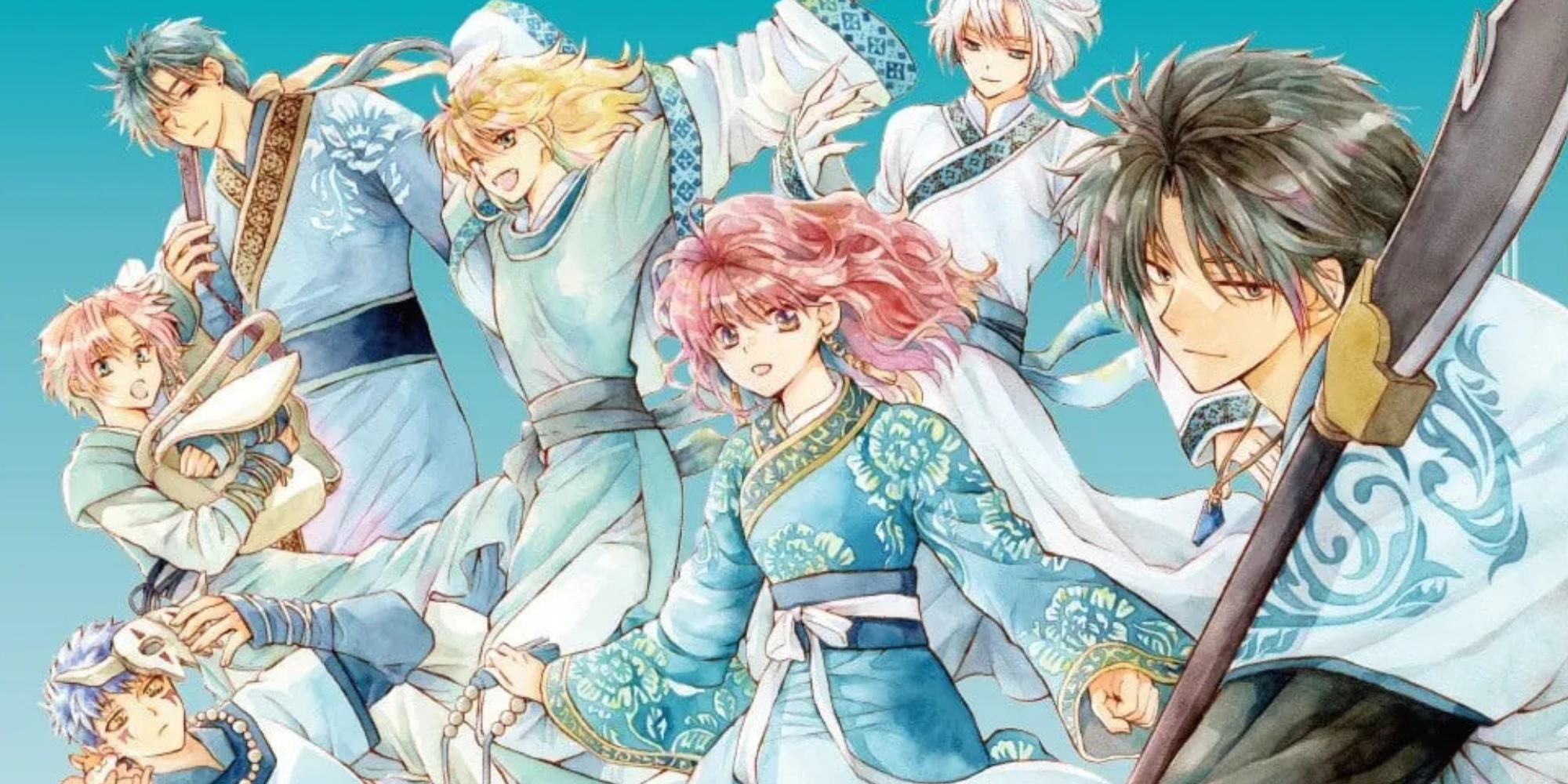
For more than sixteen years, Yona of the Dawn stood as one of shōjo manga’s most quietly ambitious epics. What began in 2009 as a palace betrayal story slowly transformed into a sweeping historical fantasy about power, responsibility, and chosen family. Its conclusion, released in Hana to Yume’s early 2026 issue, does not chase shock value. Instead, it delivers emotional closure earned through patience, restraint, and deep respect for its characters.
Calling this the best finale of 2025 isn’t hyperbole. Mizuho Kusanagi’s ending succeeds because it understands what Yona of the Dawn was always about: growth through loss, and the painful necessity of letting go. The final chapters don’t undo the suffering of the past sixteen years. They honor it, allowing every major character to step forward without divine shortcuts or narrative cheats.
Yona of the Dawn has a Finale That Respects the Journey, Not Just the Destination

The final arc returns Yona and her companions to Hiryuu Castle, completing a literal and symbolic full circle. Early Yona of the Dawn framed the castle as a place of innocence lost. The finale reframes it as a testing ground, asking whether Yona can return without becoming the powerless girl she once was. That tension defines the ending’s emotional weight.
Rather than escalating into a conventional final battle, the story narrows its focus. The threats Yona faces are no longer just external enemies but the consequences of the Dragon Gods’ influence on human lives. This choice keeps the ending intimate, emphasizing character decisions over spectacle. It’s a bold move that reinforces the series’ long-standing themes.
Zeno’s final choice becomes the emotional core of the conclusion. His decision to end the cycle of suffering tied to the Dragon Warriors reframes immortality not as a blessing, but as a lingering wound. The manga treats this moment with gravity, acknowledging centuries of pain without romanticizing sacrifice. It’s heartbreaking, but deeply consistent with his character.
After entering its final arc last year, Yona of the Dawn carefully positions every piece long before the end arrives. Nothing feels abrupt or underdeveloped.
What makes the finale resonate is its refusal to rush. After entering its final arc last year, Yona of the Dawn carefully positions every piece long before the end arrives. Nothing feels abrupt or underdeveloped. Instead, the conclusion reads like the final exhale after a very long breath, measured and intentional.
Yona of the Dawn is about Letting Go of Power and Choosing an Ordinary Future

One of the most striking aspects of the finale is the disappearance of the Dragon Gods and their blessings. With that moment, the series permanently removes its supernatural crutch. Kija, Shin-Ah, Jae-Ha, and Zeno are no longer defined by inherited power. They are finally allowed to exist as ordinary people in an ordinary world.
This choice is quietly radical for a fantasy series. Instead of rewarding the Dragon Warriors with peace through continued strength, the story grants them freedom through loss. Their separation from Yona isn’t framed as tragedy, but as necessity. Each character chooses a future unburdened by prophecy, reinforcing the series’ emphasis on self-determination.
Yona’s response to this loss highlights how far she has come. Earlier in the series, she clung desperately to those who protected her. In the finale of Yona of the Dawn, she allows them to leave, trusting their choices without resentment. It’s a subtle but powerful marker of maturity, showing leadership rooted in respect rather than dependence.
Yoon’s decision to remain at Hiryuu Castle adds another layer of emotional grounding. His choice represents continuity without stagnation. While others depart to find new paths, Yoon stays to help build something lasting. It reinforces the idea that moving forward doesn’t always mean moving away.
Soo-won, Hak, and a Bittersweet Sense of Resolution

Soo-won’s abdication is one of the finale’s most emotionally complex moments. By stepping down and acknowledging the personal resentment behind his actions, he finally confronts the moral weight of his choices. The story doesn’t absolve him, but it allows him clarity. That distinction preserves the series’ moral nuance.
Placing Yona as the rightful ruler feels earned, not symbolic. Over the years, she has learned diplomacy, warfare, and compassion through lived experience rather than royal entitlement. Soo-won’s trust in her leadership serves as quiet validation of her transformation from sheltered princess to capable sovereign.
Hak’s role in the finale is intentionally understated. Rather than dominating the conclusion, he supports Yona from behind, exactly as he has learned to do throughout the series. His strength is no longer about fighting alone, but about trust and emotional steadiness. It’s a fitting evolution for his character.
The decision not to show Hak and Yona’s wedding is a huge moment of restraint. Their promise to marry in the future feels more meaningful than a ceremonial ending. It suggests a life that continues beyond the page, reinforcing the manga’s belief that true endings aren’t about closure, but about possibility.
Why Yona of the Dawn's Ending Sets a New Standard for Shōjo Manga

What elevates Yona of the Dawn above its contemporaries is its refusal to collapse under its own legacy. After sixteen years, many long-running series resort to rushed conclusions or excessive fan service. Kusanagi instead delivers a finale rooted in thematic consistency, emotional honesty, and earned restraint.
The announced Yona of the Dawn side story, set to appear in the final collected volume, feels less like damage control and more like a thoughtful epilogue.
The announced Yona of the Dawn side story, set to appear in the final collected volume, feels less like damage control and more like a thoughtful epilogue. Kusanagi’s candid acknowledgment that not everything fit into the main ending reflects her care for the work rather than dissatisfaction with it. That transparency only strengthens fan trust.
Subscribe to our newsletter for deeper manga finale analysis
Dive further: subscribing to the newsletter gives in-depth context on manga finales like Yona of the Dawn, thoughtful character studies, and careful readings of endings—so you can appreciate storytelling choices beyond surface reactions. SubscribeSubscribe to our newsletter for deeper manga finale analysis
Dive further: subscribing to the newsletter gives in-depth context on manga finales like Yona of the Dawn, thoughtful character studies, and careful readings of endings—so you can appreciate storytelling choices beyond surface reactions. Subscribe By subscribing, you agree to receive newsletter and marketing emails, and accept Valnet’s Terms of Use and Privacy Policy. You can unsubscribe anytime.The finale also arrives alongside renewed hope for the anime adaptation, with an official Yona of the Dawn Season 2 announcement, reminding fans that the story’s legacy isn’t confined to one medium. Yet even without future adaptations, the manga stands complete. It doesn’t rely on sequels or spin-offs to justify its ending.
In a year crowded with high-profile conclusions, Yona of the Dawn distinguishes itself through quiet confidence. Its ending understands that the most powerful finales don’t shout. They listen to the story they’ve been telling all along, and then let it rest.

Yona of the Dawn
Like Follow Followed Powered by Expand
Collapse
Expand
Collapse
-
 Anime
Anime
-
 Yona of the Dawn
 35 Best Romance Anime You Should Watch Right Now
 50 Most Underrated Anime Series
 Alien: Earth’s Franchise-Breaking Xenomorph Scene Explained By Episode 7 Director